Army Stitch Patch: A Bold, Embroidered Display Typeface
There is a distinct warmth to handcrafted goods that digital perfection often fails to capture. When you hold a garment with a real embroidered patch, the texture of the thread and the slight irregularity of the stitching tell a story of care and tradition. Army Stitch Patch brings that tactile sensation directly into the digital realm. It is not just another decorative typeface; it is a visual tool designed to evoke nostalgia, durability, and a sense of rugged charm. For designers looking to bridge the gap between modern digital output and vintage aesthetics, this font offers a unique solution that stands out in a crowded marketplace.
The Visual Language of Faux Embroidery
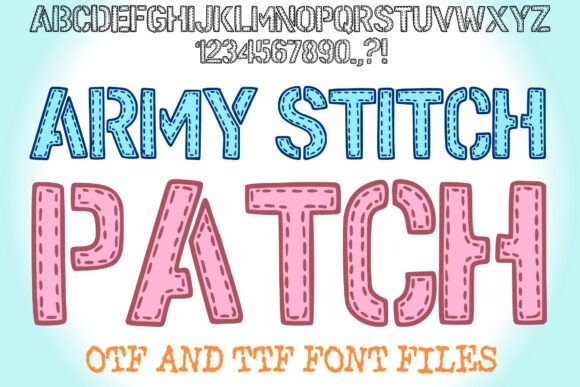
At its core, Army Stitch Patch is a display font built on the premise of imitation craftsmanship. Unlike standard sans serif fonts that rely on clean vector lines, or script fonts that mimic fluid handwriting, this typeface focuses entirely on the illusion of textile work. Every letterform is constructed with thick, black outlines that suggest heavy-duty fabric backing, while the interior details are rendered to look like cross-stitch or satin stitch embroidery.
The personality of this font is inherently bold and approachable. It carries the authority of military-inspired lettering but softens the edge with a cozy, handmade feel. This duality makes it incredibly versatile. The faux stitching details are carefully placed to mimic the way real thread sits on fabric, creating a subtle texture that adds depth to flat designs. When you zoom in, the "threads" create a rhythm that guides the eye, making the text feel substantial rather than weightless. It is a creative font that demands attention without shouting, relying on its unique texture to communicate quality and authenticity.
Strategic Applications in Branding and Design
The true value of Army Stitch Patch lies in how effectively it can be deployed across various design disciplines. Because it mimics a physical object, it works exceptionally well in projects where the final product might actually involve textiles. For apparel designers, using this font for t-shirt prints creates an immediate expectation of quality, suggesting that the graphic will be durable and long-lasting, much like a sewn-on patch.
Beyond clothing, this typeface finds a natural home in packaging design and logo design. Small businesses, particularly those selling organic products, craft supplies, or outdoor gear, can leverage this font to establish a brand identity rooted in tradition and trust. Imagine a coffee bag or a soap label featuring this font; the visual cue of stitching implies that the contents inside were made by hand with attention to detail. In editorial design, it serves as an excellent pull-quote style or section header, breaking up dense blocks of text with a playful, textured element that invites the reader to pause.
Digital applications are equally promising. In web design, Army Stitch Patch can be used sparingly for hero headlines or call-to-action buttons to inject personality into a minimalist interface. Social media graphics also benefit from this style, as the high contrast of the black outline ensures legibility even at smaller sizes on mobile devices. Whether you are creating assets for Cricut Design Space, Procreate, or Adobe Illustrator, the font scales well, maintaining its character whether it is filling a billboard or adorning a small fabric label.
Readability and Visual Hierarchy Considerations
While Army Stitch Patch is visually striking, it is important to treat it as a display font rather than a body text solution. The intricate stitching details, while charming, can become difficult to decipher if used in long paragraphs. To maintain readability and a strong visual hierarchy, this typeface should be reserved for headlines, logos, and short phrases where impact is the primary goal.
When integrating this font into a larger project, pairing is key. The best results come from contrasting Army Stitch Patch with a clean, neutral sans serif font or a simple serif font. The complexity of the stitched letters needs breathing room, and a straightforward companion typeface allows the main headline to shine without competing for attention. This balance ensures that your audience engages with the message first and appreciates the design second. If you are working on a commercial font project where professionalism is paramount, remember that less is more; let the texture speak for itself rather than overcrowding the layout.
Practical Implementation and Licensing
For creatives ready to incorporate this style into their workflow, Army Stitch Patch comes equipped with both OTF and TTF files, ensuring seamless compatibility across major design platforms. Whether you are a hobbyist using Canva for social media posts or a professional designer working in Photoshop and Illustrator, the font installs easily and functions reliably. The inclusion of capital letters in a black outline style, along with numbers and punctuation, provides enough variety for most branding needs without overwhelming the user with unnecessary glyphs.
Evaluating the fit for your specific project involves asking a few practical questions. Does your brand voice align with a rustic, handmade aesthetic? Is the context of the design suitable for a bold, textured headline? Testing the font in different sizes and colors is essential before committing to a final design. While the default black outline is classic, experimenting with color fills can further enhance the "embroidered" effect, especially when paired with textures like denim or canvas backgrounds.
Finally, always review the licensing terms associated with any premium font. As a commercial font, understanding the rights regarding print runs, merchandise sales, and digital usage is crucial for entrepreneurs and small business owners. Using a licensed asset protects your brand identity and ensures that your creative investments remain secure. By choosing a well-crafted typeface like Army Stitch Patch, you are not just selecting a set of letters; you are investing in a design asset that communicates quality, history, and a personal touch to your audience.