Decort: A Modern Art Deco Display Font for Sophisticated Branding
In the realm of typography, few styles command attention quite like Art Deco. Characterized by bold geometric forms, luxurious symmetry, and a sense of dynamic movement, this aesthetic has long been associated with high-end design and cultural opulence. Decort is a display font that seeks to capture this specific energy, translating the visual language of the 1920s into a digital asset suitable for contemporary creative workflows. For designers, marketers, and brand strategists looking to inject a sense of timeless elegance into their projects, understanding the practical application and limitations of Decort is essential.
This evaluation explores what Decort brings to the table, how it performs in real-world scenarios, and whether its distinct characteristics align with the needs of modern professionals. Rather than simply listing features, we will examine the font's structural integrity, versatility, and the specific contexts where it delivers the most value.
The Design Philosophy Behind Decort
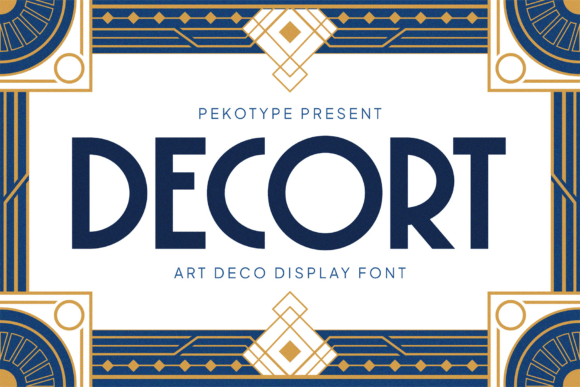
At its core, Decort is an all-caps display typeface designed to evoke the "Roaring Twenties" without feeling like a historical costume. The designer has focused on balancing the dramatic flair typical of the era with the legibility requirements of modern screen and print media. The font relies heavily on strong vertical strokes and sharp angles, creating a silhouette that feels both sturdy and refined.
What makes Decort worth discussing is its approach to geometry. Unlike some retro fonts that rely on excessive ornamentation or distressed textures, Decort maintains a clean, crisp profile. The curves are precise, and the negative space within the letters is carefully managed to prevent the glyphs from appearing cluttered at smaller sizes. This restraint allows the font to feel luxurious rather than kitschy, a crucial distinction for brands aiming for sophistication.
The inclusion of multilingual support further expands its utility. In an increasingly global marketplace, a font that supports extended character sets allows for seamless branding across different regions. Whether you are designing a poster for a Parisian fashion show or packaging for a New York-based boutique, Decort ensures consistency in style while accommodating diverse linguistic needs.
Key Characteristics and Visual Strengths
When analyzing the technical and aesthetic qualities of Decort, several key attributes stand out. These features define its usability and determine where it fits best within a design system.
- Bold Geometric Structure: The foundation of Decort lies in its geometric construction. Letters are built upon circles, squares, and triangles, creating a unified visual rhythm. This structure provides immediate visual weight, making it ideal for headlines and titles that need to anchor a layout.
- Refined Symmetry: Symmetry is a hallmark of Art Deco, and Decort embraces this fully. The balance between the left and right sides of characters creates a sense of stability and order. This symmetry contributes to the font's perception of luxury and reliability.
- All-Caps Architecture: Designed exclusively as an uppercase typeface, Decort leverages the inherent authority of capital letters. This choice simplifies kerning and tracking adjustments, allowing designers to focus on spacing and impact rather than mixing case styles.
- Versatile Stroke Weight: While primarily bold, the stroke weights are modulated enough to maintain clarity. The contrast between thick and thin elements is subtle but present, adding a layer of refinement that prevents the font from looking blocky or industrial.
These characteristics combine to create a typeface that exudes confidence. When used correctly, Decort does not just sit on the page; it commands it. The visual hierarchy is established instantly, guiding the viewer's eye to the most important information.
Practical Applications in Real-World Projects
The true test of any display font is its performance in actual design scenarios. Decort shines in contexts where the goal is to communicate prestige, exclusivity, or a connection to heritage. Below are several areas where this font proves particularly effective.
Branding and Logo Design
For businesses operating in the luxury sector—such as jewelry, high-end spirits, fashion, or hospitality—Decort offers a compelling option for logo creation. Its strong lines hold up well when scaled down for business cards or embossed on packaging. The geometric nature of the font also lends itself well to monogramming, allowing for intricate interlocking designs that remain legible.
Event Invitations and Stationery
The vintage charm of Decort makes it a natural fit for event invitations, particularly for galas, weddings, or product launches that aim for a glamorous atmosphere. Paired with elegant serif body copy and ample white space, Decort can set a tone of anticipation and class. It works exceptionally well in printed materials where texture and paper quality can enhance the tactile experience of the design.
Packaging and Product Labels
In the crowded retail landscape, packaging needs to stand out. Decort's bold presence ensures that product names are immediately visible on shelves. The font's association with the 1920s can be used strategically to suggest craftsmanship, tradition, or a "classic" recipe, which is a common marketing angle in the food and beverage industry.
Digital Media and Posters
While primarily a display font, Decort translates well to digital formats. On websites, it serves as an impactful hero headline. However, designers must be mindful of screen resolution and loading times. The font's sharp details render clearly on high-resolution displays, but care should be taken when using it on mobile devices to ensure the text remains readable at small viewport widths.
Evaluating Usability and Limitations
Despite its strengths, Decort is not a universal solution. Understanding its limitations is just as important as recognizing its capabilities. As a display font, it is intended for short bursts of text. Using Decort for body copy would result in poor readability and visual fatigue due to the lack of lowercase variation and the density of the letterforms.
Furthermore, because Decort is so distinctive, it requires careful pairing with other typefaces. It competes for attention, so it should be balanced with a neutral sans-serif or a delicate serif for supporting text. Overusing decorative fonts can dilute a brand's message, so restraint is key. Designers should reserve Decort for primary headlines, logos, or accent elements rather than trying to make it the workhorse of an entire document.
Another consideration is the context of the audience. While the Art Deco style is generally perceived as sophisticated, it may not resonate with brands targeting a minimalist, tech-forward, or ultra-modern demographic that prefers stark, utilitarian aesthetics. In such cases, the ornamental nature of Decort might feel out of place.
Who Benefits Most from Decort?
Decort is ideally suited for a specific subset of creatives and business owners. Freelance graphic designers working on wedding suites or luxury brand identities will find it a valuable addition to their toolkit. Entrepreneurs launching premium products can leverage its vintage appeal to differentiate themselves in saturated markets. Marketers running campaigns that emphasize heritage, quality, or celebration will also benefit from its evocative power.
Additionally, publishers and bloggers focusing on lifestyle, history, or interior design can use Decort to create visually engaging headers that complement their content themes. For educators teaching typography or design history, Decort serves as an excellent example of how historical styles can be adapted for digital use.
Final Thoughts on Long-Term Value
In the fast-paced world of design trends, many fonts quickly become dated. However, the Art Deco aesthetic has demonstrated remarkable staying power, cycling in and out of popularity for nearly a century. Decort taps into this enduring appeal, offering a tool that feels both nostalgic and fresh. Its clean execution ensures it won't look obsolete in a few years, provided it is used with good taste and appropriate context.
Ultimately, Decort is more than just a collection of shapes; it is a vehicle for storytelling. It allows designers to convey a narrative of luxury, confidence, and timelessness without saying a word. For those willing to invest the time in understanding its nuances and pairing it effectively, Decort offers a reliable and stylish solution for elevating visual communication. Whether for a single logo or a comprehensive brand identity, its ability to blend geometric precision with artistic flair makes it a worthy contender in the modern typographic landscape.