Black Letter: Bridging Rustic Charm and Modern Design Impact
In an era where digital perfection often leads to visual homogeneity, designers and brand strategists are increasingly seeking typography that breathes. They are looking for fonts that tell a story before a single word is read. This shift has brought Black Letter into the spotlight, not as a relic of the past, but as a dynamic tool for contemporary expression. As a bold, handmade display font, Black Letter balances simplicity with strong visual impact, offering a unique solution for creators who need to stand out in a crowded marketplace.
The resurgence of this style is more than just a fleeting aesthetic trend; it represents a deeper cultural pivot toward authenticity. Whether you are designing posters, book covers, signage, or comprehensive branding systems, Black Letter adds an expressive, confident touch that draws the eye immediately. It is a typeface designed for those who understand that in the modern economy, personality is currency.
The Anatomy of Authenticity: What Makes Black Letter Unique?
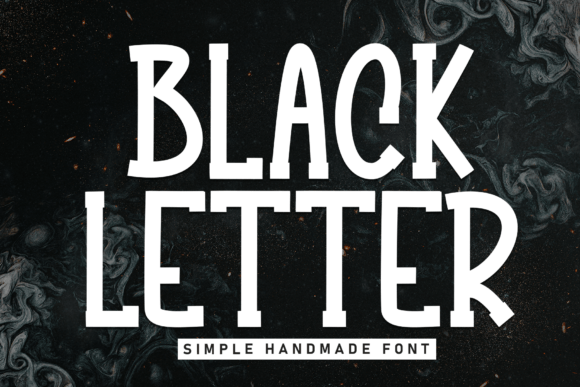
To understand why Black Letter is capturing the imagination of professionals across industries, one must first examine its structural DNA. Unlike standard sans-serif or serif fonts that prioritize uniformity and grid-based alignment, Black Letter embraces the irregularities of human craftsmanship. Its tall, slightly condensed letterforms feature unique cutouts and playful angles, giving it a handcrafted, rustic charm that feels both grounded and elevated.
This specific design language serves a functional purpose beyond mere decoration. The condensed nature of the characters allows for impactful headlines without consuming excessive horizontal space, making it ideal for mobile-first designs and compact packaging. Meanwhile, the unique cutouts within the letterforms create negative space that invites the viewer to engage more deeply with the text. These aren't just holes; they are intentional design choices that break up the visual weight, preventing the boldness from becoming overwhelming.
Furthermore, the playful angles inherent in the font suggest movement and energy. In a static medium like print, these angles create a sense of dynamism. In digital interfaces, they imply interactivity and forward motion. This duality makes Black Letter exceptionally versatile. It can anchor a vintage-inspired campaign while simultaneously feeling fresh and relevant in a tech startup's pitch deck.
Why the Market is Craving the Handcrafted Vibe
The popularity of Black Letter cannot be divorced from the broader consumer trends shaping our world. We are witnessing a significant "humanization" of brands. As artificial intelligence and automation streamline production, consumers have developed a counter-reaction: a deep desire for the tangible, the imperfect, and the human-made. People are paying attention to Black Letter because it signals that a brand values craft over mass production.
For entrepreneurs and marketers, this is a critical insight. When a customer sees a logo or headline rendered in Black Letter, they subconsciously associate the brand with qualities like reliability, heritage, and artisanal quality. This is particularly effective in sectors such as:
- Craft Beverages: Breweries and distilleries use Black Letter to evoke tradition and small-batch integrity.
- Sustainable Fashion: Clothing lines utilize the font to communicate ethical sourcing and manual construction.
- Independent Publishing: Authors choose it for book covers to signal a narrative depth that mass-market paperbacks lack.
- Gourmet Food Services: Restaurants leverage the rustic charm to promise farm-to-table freshness.
The font acts as a visual shorthand for "made with care." In a digital landscape saturated with sleek, sterile minimalism, the texture and character of Black Letter provide a necessary friction—a visual hook that stops the scroll.
Integrating Black Letter into Modern Workflows
Adopting a bold display font like Black Letter requires a strategic approach to workflow and application. While the font is described as easy to read, its strength lies in its impact, which means it should be used intentionally rather than ubiquitously. It is a display font, meaning it excels in headlines, logos, and short bursts of text rather than long-form body copy.
Designers are finding success by pairing Black Letter with neutral, clean sans-serif fonts for body text. This contrast creates a hierarchy that guides the reader effortlessly. The bold, handmade nature of the header grabs attention, while the supporting text provides clarity and information. This combination satisfies the dual need for emotional engagement (via the Black Letter) and informational efficiency (via the body font).
Practical Applications in Branding and Signage
When applied to physical signage, Black Letter transforms ordinary storefronts into destinations. The tall letterforms ensure legibility from a distance, while the rustic details reward closer inspection. For local businesses, this can be the difference between a passerby glancing over and stopping to enter. The font communicates a welcoming, established presence that feels part of the community fabric.
In the realm of digital branding, the versatility of Black Letter allows for creative experimentation. Because the letterforms feature unique cutouts, they work exceptionally well with overlay effects, gradients, and even kinetic typography animations. A marketing team might animate the cutouts to reveal a call-to-action, turning the font itself into an interactive element. This adaptability ensures that Black Letter remains relevant as technology evolves, moving seamlessly from static print to immersive web experiences.
Changing Expectations: The Shift Toward Expressive Confidence
The rise of Black Letter reflects a changing expectation among audiences regarding how brands should present themselves. The old guard of corporate communication valued neutrality and invisibility. Today, however, the most successful brands are those that possess a distinct voice and visual identity. Consumers expect brands to take a stance, to show personality, and to be memorable.
Black Letter answers this demand for expressive confidence. It does not whisper; it declares. Its bold stroke width and angular geometry project self-assurance. For freelancers and agencies pitching to clients, using Black Letter in their own portfolios can signal that they are not afraid to make bold design decisions. It suggests a willingness to break conventions and explore new territories.
Moreover, the font bridges the gap between vintage inspiration and contemporary execution. Many brands struggle to honor their history while remaining current. Black Letter solves this by offering a look that feels timeless yet modern. It respects the traditions of blackletter typography—historically associated with authority and permanence—but strips away the complexity that made older versions difficult to read on screens. The result is a font that feels rooted in history but built for the future.
Strategic Implementation for Maximum Impact
To fully leverage the potential of Black Letter, creators must consider the context of the message. Is the goal to evoke nostalgia? To assert dominance? Or to invite curiosity? The font's inherent characteristics allow it to pivot between these modes depending on color, weight, and surrounding whitespace.
- Color Contrast: Using high-contrast colors against Black Letter enhances its boldness, making it ideal for protest art or activist campaigns.
- Texture Integration: Pairing the font with grainy textures or paper backgrounds amplifies the handmade feel, perfect for lifestyle blogs and artisanal product pages.
- Minimalist Settings: Placing Black Letter in vast amounts of white space highlights its geometric precision, appealing to modern luxury markets.
Ultimately, the decision to use Black Letter is a statement about the values of the creator. It is a choice to prioritize character over convenience and connection over conformity. As the market continues to fragment and niche audiences become more discerning, the ability to communicate a specific vibe quickly becomes essential.
Conclusion: A Font for the Future of Creative Expression
Black Letter is more than just a collection of glyphs; it is a design philosophy wrapped in a bold, readable package. It addresses the modern need for authenticity while providing the technical robustness required for today's multi-channel media environments. From the rustic charm of a coffee shop sign to the confident headlines of a tech blog, this font proves that the past and future can coexist beautifully in design.
For professionals, creators, and entrepreneurs, embracing Black Letter offers a pathway to differentiation. It allows brands to speak with a voice that is both grounded and ambitious. As we move forward into a future where digital fatigue is a growing concern, tools that bring back the warmth of the handcrafted will only become more valuable. Black Letter stands ready to meet this challenge, offering a versatile, easy-to-read, and full-of-personality solution for the next generation of great design.
Whether you are rebranding a legacy company or launching a disruptive startup, consider the power of a font that doesn't just sit on the page but interacts with it. With Black Letter, you aren't just choosing a typeface; you are choosing a perspective—one that values the bold, the handmade, and the unmistakably real.